A resource for information about types of wigs, how to care for wigs and how to style them for hair loss or for fun
Wig Types and Terms
In this page, I wanted to lay out all the different options there are for wig types. I have also put together a list of wig terms that you will see when shopping for wigs and accessories to go with them. Just a note; links in this article are affiliate links. If you use them to purchase anything, I will receive a small amount of commission at no cost to you.
Synthetic Wigs with Cap
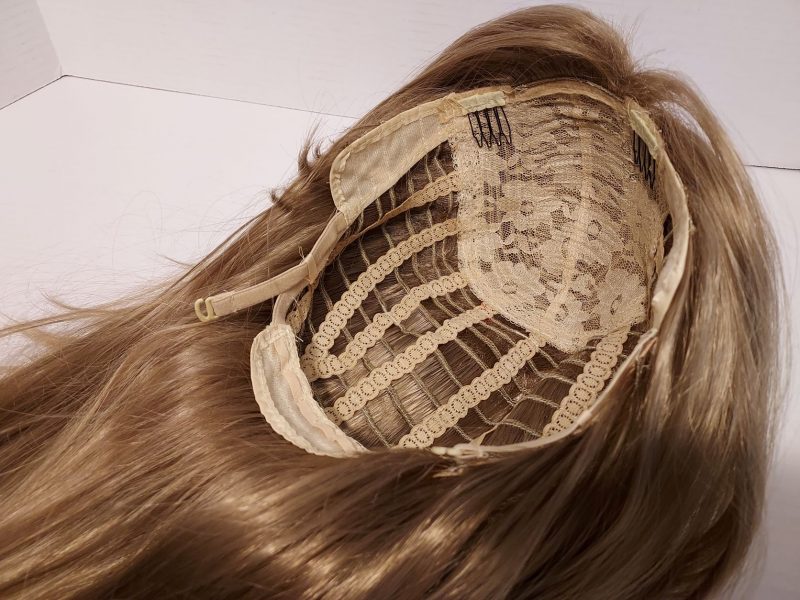
These wigs have hair usually made from kanakelon or some other non-bio material attached to a close-fitting cap usually held on with elastic bands. Many are adjustable using straps that clip into points inside the cap, and some have comb-like clips to help the cap stay on better.
Benefits:
Most affordable. If I go to Amazon and search for synthetic wigs, there are plenty of results for less than $30 usd. For those who are willing to wait a little longer, many similar styles are on Aliexpress for even less.
Simplest to put on and take off. It’s as simple as putting on a wig cap (if you need one for your natural hair) and sliding your wig on. That’s not to say there aren’t ways of improving the look of cheap synthetic wig; it’s that synthetic wigs can be worn without glue, unlike most lace front wigs. This also means that it’s within reach for most people to have multiple wigs on hand for different looks. This is especially useful if you’re into cosplay.
Easy to Do Simple Styling. With a few tools that you might already have, a synthetic wig can be curled, straightened or trimmed to achieve a number of different looks.
Drawbacks:
Less realistic hairline. Without some styling modifications, it’s really obvious out of the box that is a wig. There are ways of modifying even the cheapest cap wigs for a more natural looking hairline, and many wigs have bangs that cover the forehead anyway.
Doesn’t work for Ponytails or updo’s. The hair on most cap wigs is designed to look good going in one direction. Put the hair up in a high ponytail, and the cap underneath the hair is often visible. A low ponytail can still work, depending on the wig.
Lace Front Wigs
These wigs have a fine skin-toned lace at the front of the hairline that can be glued down to the forehead with a special glue, giving the wearer a much more natural look in the front. A little foundation or concealer is often useful to make the lace invisible by helping it blend into the skin better.
Benefits:
More styling options. Depending on the wig, lace front wigs are often designed to look good with many different styles with higher hair counts for the same area versus other wig kinds.
Can be worn for longer periods. Some people who wear lace-front wigs keep them on for weeks at a time. This usually recommended, but to each their own. Lace front wigs generally last longer than cap wigs, as well.
Adhere to your head better. Gluing that wig down has its benefits. Lace front wigs will stay on better if you’re moving around more. This will vary depending on what you’re doing.
Drawbacks:
More expensive generally. Lace front wigs usually cost more than $50 usd; Lace front wigs over $100 are pretty common.
Require more steps to put on and take off. Since skin safe adhesives are involved, it’s best to take the time to put lace front wigs on and make sure it dries before you do anything else. Some folks even have their stylist install their wig for them professionally.
Human Hair Wigs
It’s exactly what it sounds like. These wigs are made using hair that was donated or sold by another person, then turned into a wig. Most human hair wigs are lace-front type.
Benefits:
Very natural-looking when taken care of well. Nothing will stimulate the look of human hair better than the real thing.
Can be styled just like natural hair. While it’s a lot easier to style a wig on a wig stand, most people already have the things they need to style human hair.
Drawbacks:
Most expensive. Most human hair wigs cost more than $100 usd. This is because of the extra cost to obtain, clean and work with actual human hair, which also isn’t as available as most synthetic materials. Imported human hair is often used, which only adds handling cost.
Wear out faster than synthetic hair. Natural hair growing out of the wearer’s head makes more of itself to replace itself over time. Wigs obviously don’t do that.
Other Supplemental Hairpieces
These smaller hairpieces are matched to your natural hair color, and are used to fill out any spots in your hair that are thin, or to enhance your existing hair. Extensions, toupées and clip-on ponytails are a few examples
Benefits:
Small, easy to work with
Many different styles and patterns to choose from
Drawbacks:
Matching your existing hair may take some trial and error. You may need to work with a stylist to get just the right shade. Alternatively, you may be able to dye the piece yourself to match your hair if you are feeling adventurous